Quotebeam
Pricing Management.
Building an e-commerce platform for the industrial automation market.
- Client
- Quotebeam
- Role
- Product Designer
- Year
- 2023 — 2024
- Scope
- Buyer experience · Admin tooling
Client.
Quotebeam is a startup I had the pleasure of working with as a product designer for 2.5 years. Initially, the company functioned as a marketplace for automation parts, allowing local distributors in the U.S. to list their products while buyers worldwide could purchase them or request a quote. Over time, the company expanded into offering a SaaS product — an e-commerce store and website solution tailored to U.S.-based automation parts distributors looking to complement their traditional sales models with an online presence. This digital product eventually became Quotebeam's core offering.
My role.
Working with Quotebeam provided me with a full startup experience, where I, as a product designer, had a significant influence on the development of our software. This was largely possible because the company, at that stage, had around ten employees, for whom I was either the sole designer or shared my duties with one other colleague. My responsibilities ranged from engaging in discussions about customer needs and planned functionalities to shaping them into process flows and designing individual screens.
My primary role was twofold: ensuring an excellent experience for the end customers visiting the online store and creating tools that empowered sales agents to drive more sales. Additionally, due to my background in graphic design, I was responsible for the company's branding and the creation of our design system.
Context
Industry-specific challenges impacting product design.
It goes without saying that pricing is one of the most critical factors in e-commerce success.
The combination of product availability and competitive pricing — while maintaining a healthy margin — is key to closing sales.
For most e-commerce models, pricing is a straightforward concept: setting a margin, manually adjusting prices for specific products, and applying discounts generally cover the essentials.
However, for Quotebeam's SaaS clients, the situation was far more complex.
Local distributors in the U.S. must adhere to numerous industry-specific pricing regulations.
Understanding these rules was my first step in designing effective solutions.
Let's go through one of the examples.
Sales territories
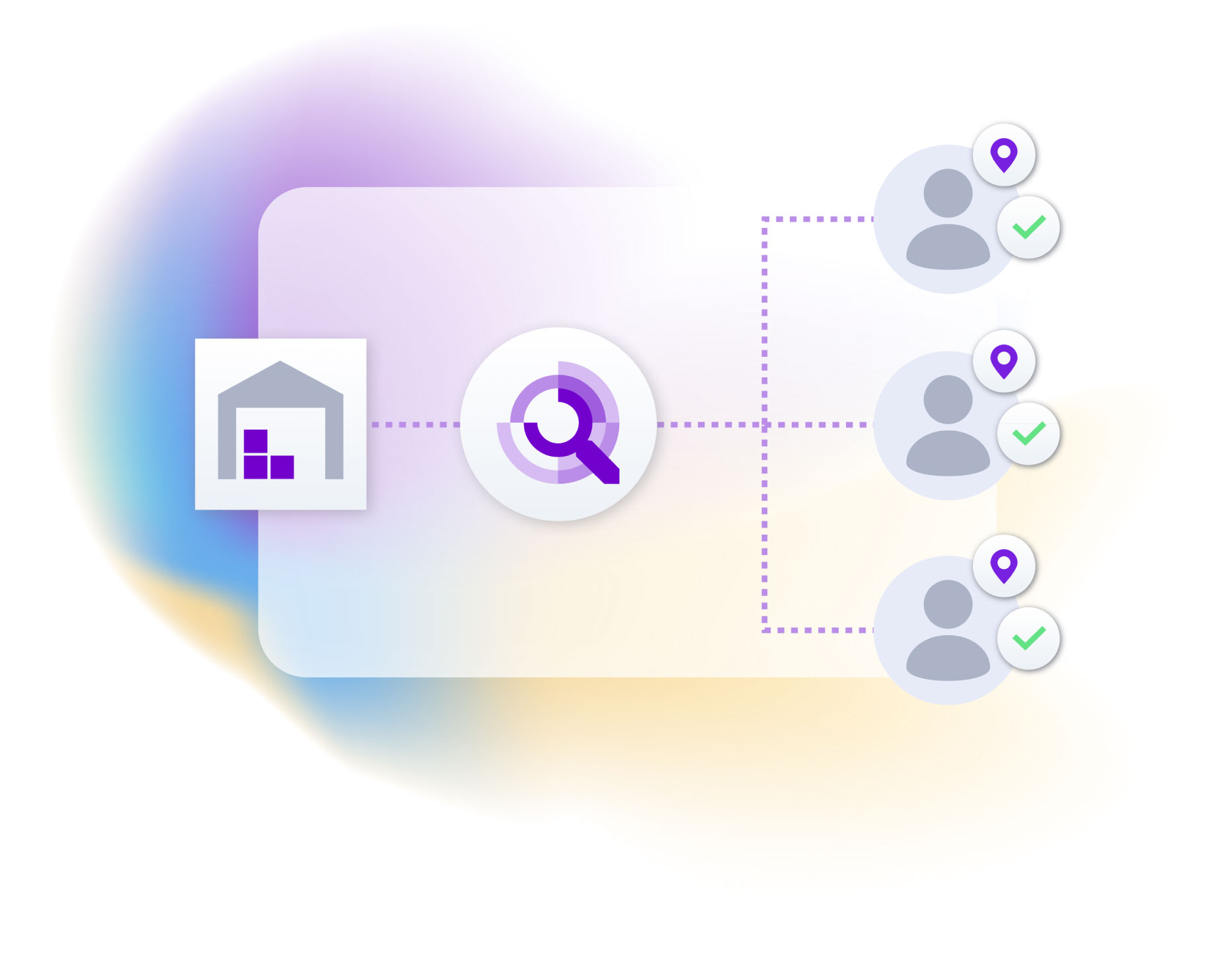
Breaking it down: the complexity of sales territories.
If you are a local distributor, you are allowed to sell automation parts from brands like Siemens, ABB, or Festo at a discounted price — but only within a specific geographic region, as defined by your contract with the manufacturer.
For example, if you operate in California, you may be authorized to sell at distributor pricing within California or possibly California and Nevada.
You can still sell to companies outside of your designated territory, but only at the "list price" — a price so high that closing the sale is unlikely.
End-customer experience
Product design solutions — end-customer experience.
As a designer, I needed to rethink common UX patterns recommended for e-commerce. For example, industry best practices suggest reducing friction by avoiding forced logins and enabling guest checkouts. However, in this case, we had to challenge these norms.
Since pricing rules meant that only logged-in customers could see discounted prices, showing the "list price" to anonymous users would deter potential buyers. We had to create UX solutions that encouraged users to log in while maintaining a smooth shopping experience.
Solution 1
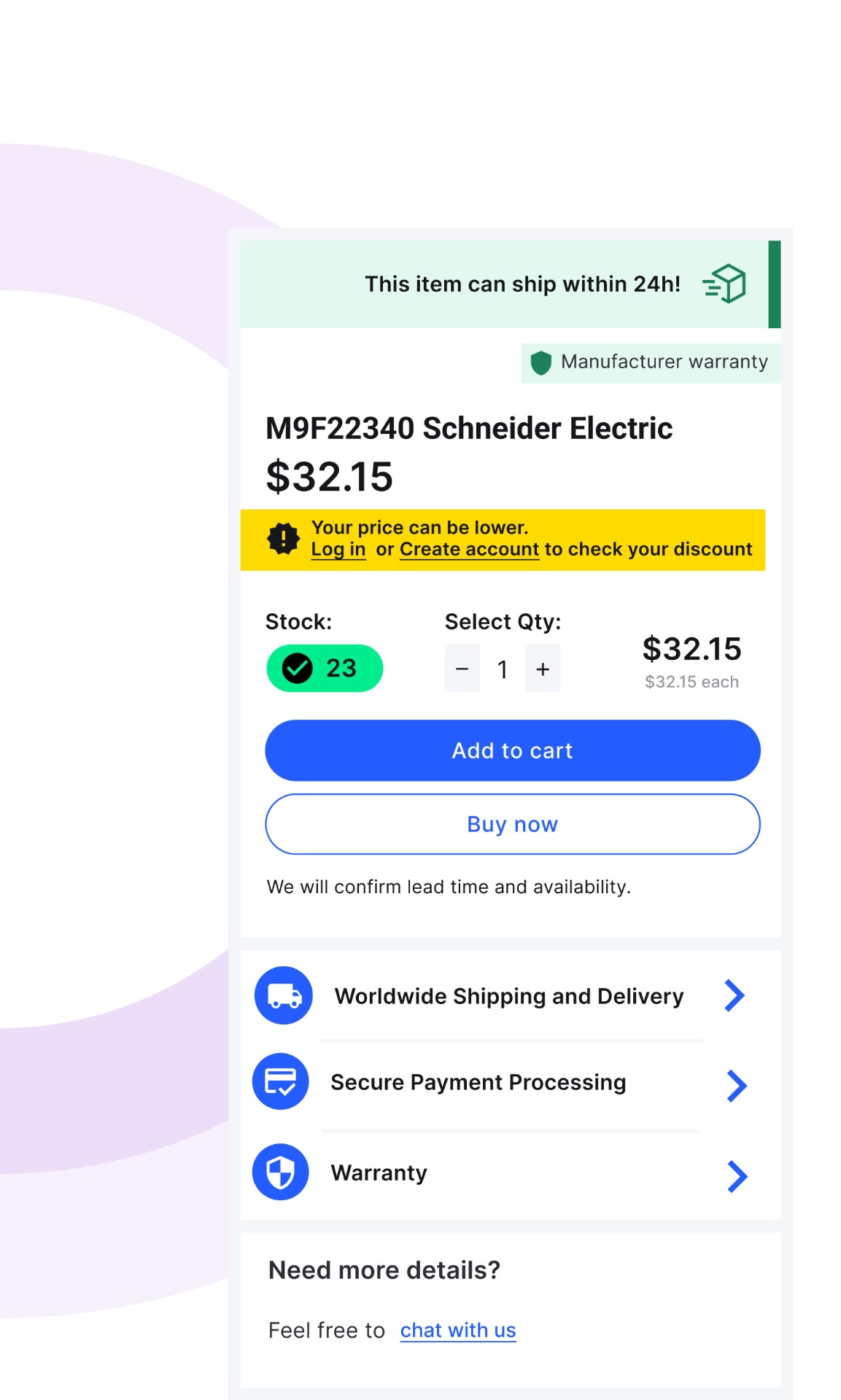
Visibility of login prompts.
We introduced prominent banners on product pages encouraging users to log in or create an account. These banners were even more visually dominant than the "Add to Cart" button.
The message highlighted the potential for discounts upon logging in.
If a user did not meet the sales territory criteria, we could still display an alternative offer — such as a 5% discount on their first purchase. This flexibility was left to the individual distributor's discretion.
Solution 2
Chat experience optimization.
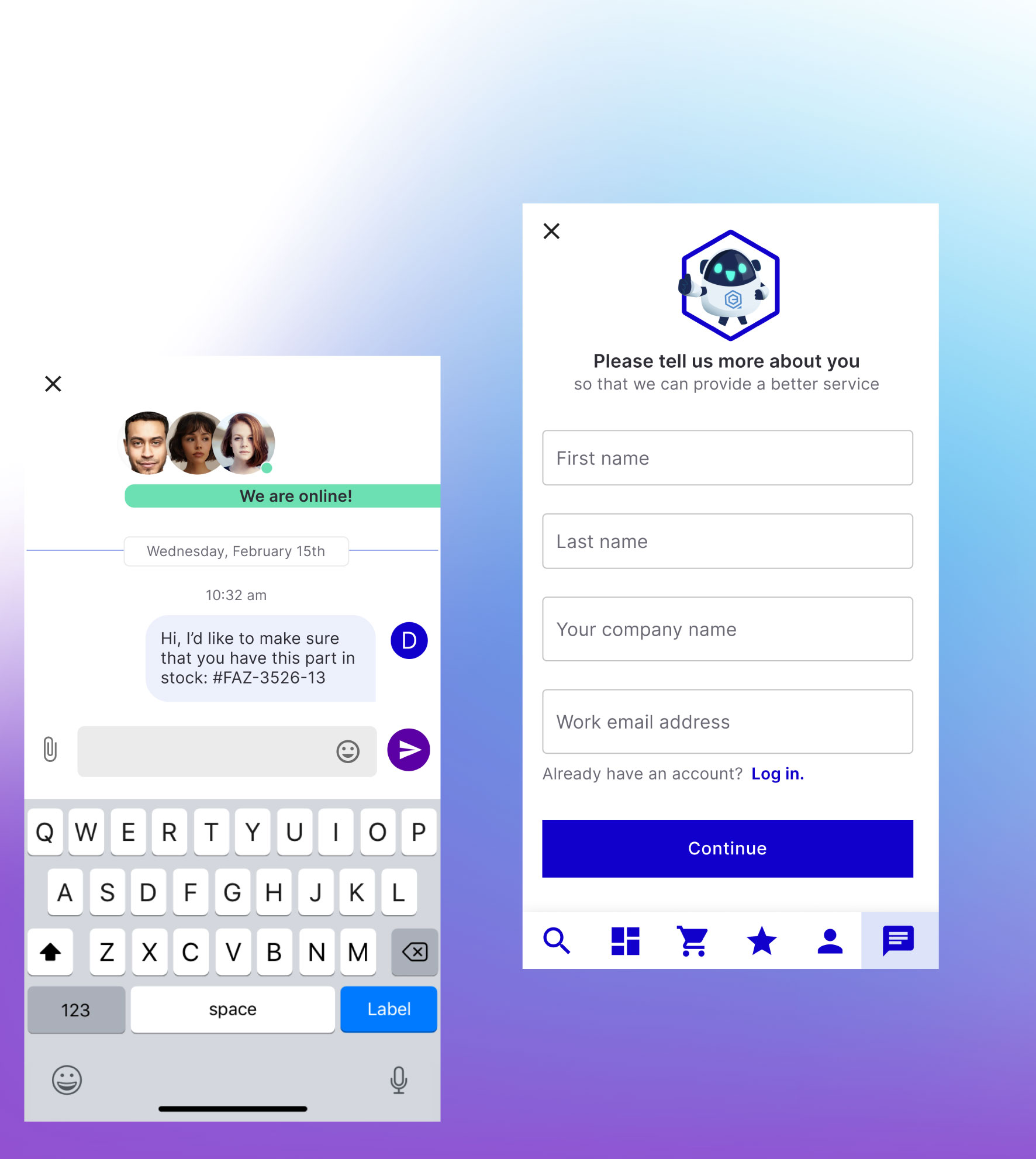
In this industry, customers frequently use chat or email to inquire about product specifications, availability, and lead times. We designed our chat experience to encourage engagement while subtly collecting essential customer data.
The first step was allowing users to type their message freely. However, before they could send it, they had to provide their name, company name, and email address.
Our hypotheses: a user who has already taken the time to type a message is more likely to complete the process by submitting their contact details. Since we were working with B2B customers, providing a work email was a standard business practice and would not generate the same resistance as it might in a B2C setting.
To ensure the best user experience, we streamlined the process as much as possible. Instead of explicitly asking users for their location, we used domain data from their email address to determine their company and geographical region, ensuring accurate pricing display.
These hypotheses and solutions were continuously validated using Google Analytics and session recording tools.
Admin experience
Product design solutions — store administrator experience.
Encouraging users to log in was only half the battle. The other critical aspect was equipping store administrators with the right tools to manage pricing effectively, within the constraints of their manufacturer agreements. These functionalities became a key differentiator for Quotebeam, solving problems that standard e-commerce platforms like Shopify did not address.
Key features I designed include:
1. Manufacturer management
Manufacturer management.
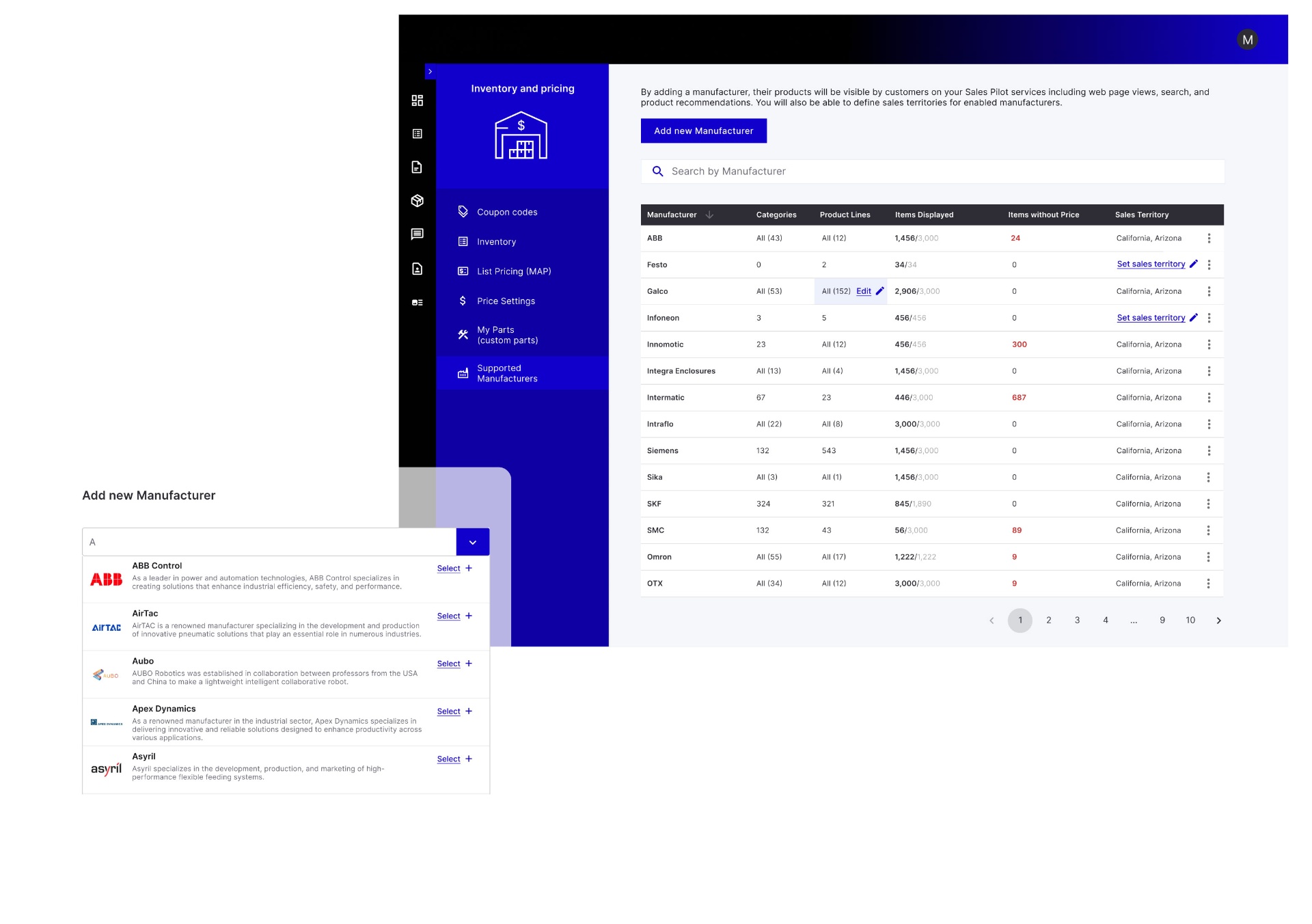
Quotebeam offers API connections with manufacturers, pulling in inventory, stock levels, pricing, and product data. We designed an intuitive process for enabling manufacturers, allowing store admins to:
- ·Select which manufacturers to support.
- ·Choose between listing all products from a manufacturer or only specific product lines or categories.
- ·Identify and resolve product display issues, such as missing pricing data, by uploading new price lists or manually updating items.
2. Sales territory
Sales territory definition.
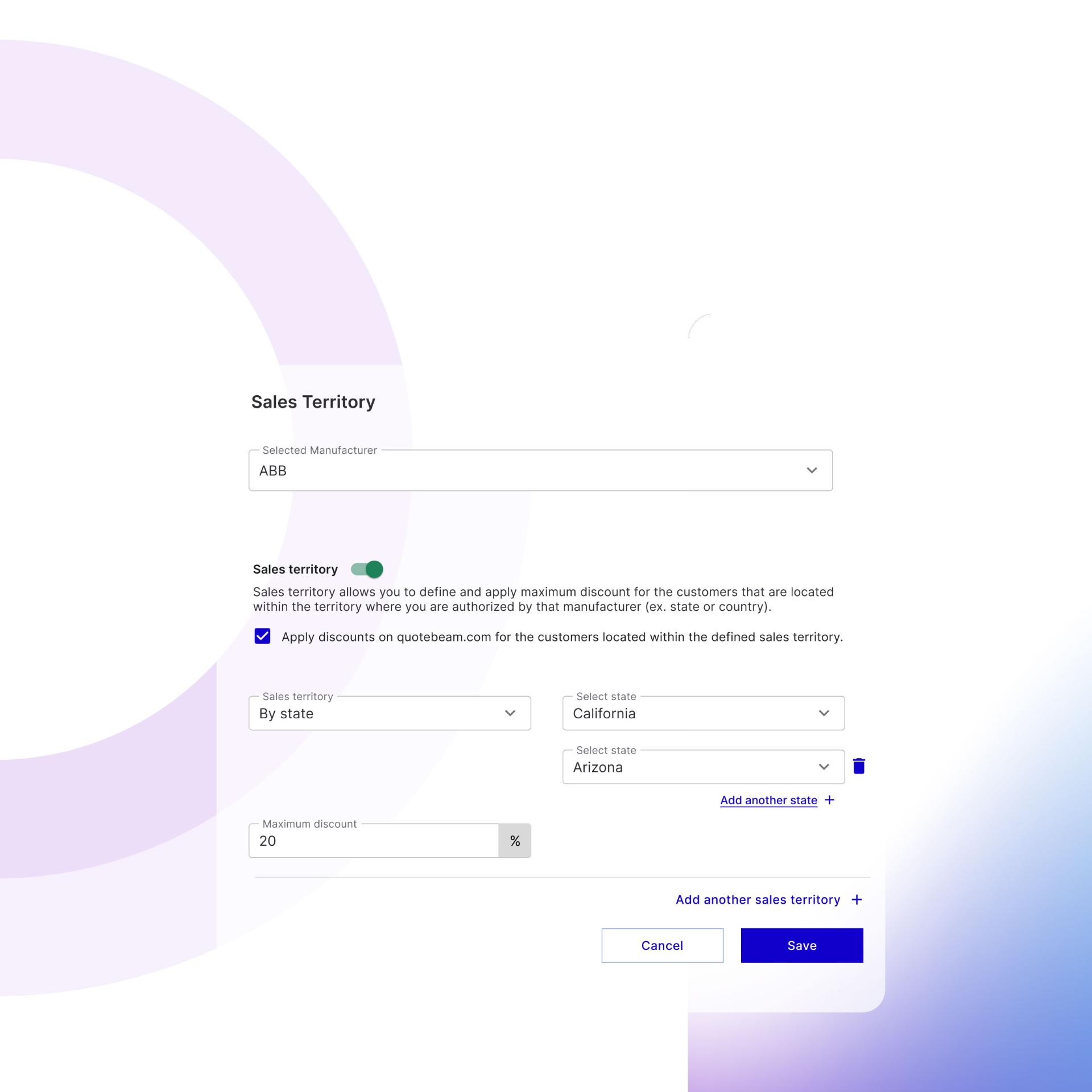
Sales territory rules needed to be defined at the manufacturer level since they were dictated by legally binding contracts. To streamline this, we integrated territory configuration into the manufacturer onboarding process while also allowing for easy adjustments later.
3. Custom price catalogs
Custom price catalogs.
To encourage long-term customers to adopt e-commerce rather than relying on phone or in-person orders, we introduced personalized price catalogs. These allowed store admins to set discounts at various levels:
- ·Individual products
- ·Product categories
- ·Product lines
Discounts could be applied as:
- ·A percentage off the list price
- ·A custom margin added to the cost
- ·A specific fixed price per product
This level of pricing flexibility mirrored traditional negotiation-based B2B sales practices, helping distributors transition their clients to online purchasing.
4. Standard pricing tools
Standard pricing tools.
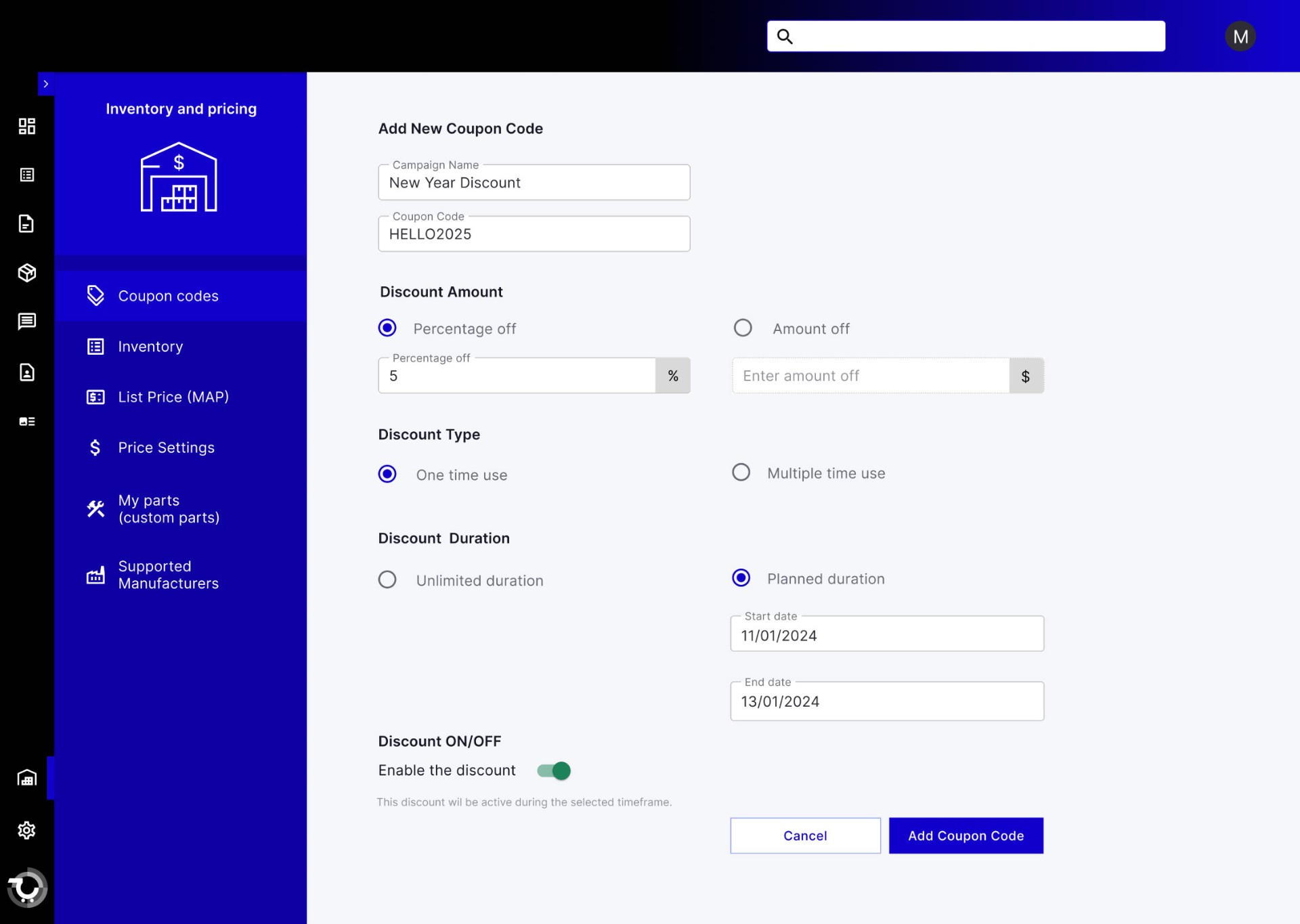
Beyond industry-specific features, the admin panel included essential pricing tools designed with best UX practices in mind. These included:
- ·Default and minimum profit margin settings
- ·Price calculations based on list price discounts
- ·Coupon code generation for additional flexibility
Final thoughts.
This case study does not focus on the micro-details of interface elements. Instead, it highlights how deeply understanding industry-specific needs and constraints informs product design. By merging domain expertise with well-structured workflows and interfaces, we created a solution that not only met compliance requirements but also provided a seamless, high-converting experience for both buyers and sellers.
Designing a digital product isn't just about aesthetics — it's about crafting experiences that solve real-world problems.
Next case study
Quotebeam